

EMBODIED AWAKENING: 200HR Yoga Teacher Training
Most Yoga Teacher Trainings Teach You to Lead a Class.
This One Teaches You to Understand Yoga
28-Day Residential Yoga and Embodiment Teacher Training, San Cristóbal de las Casas, Mexico. March 2027 and November 2027. Yoga Alliance RYT 200 Registered.
Most trainings will teach you to sequence a class, cue alignment, and tick the Yoga Alliance boxes. We offer you something deeper.
We start with a simple premise: that yoga has roots far older and far richer than the studio culture most of us inherited. That those roots point toward something real: the embodied recognition of awareness as the ground of experience, or awakening. Something to be lived, not performed.
This training is for practitioners who have felt the gap between what yoga has become and what they sense it could be. Who want to teach from genuine understanding. Who are ready to spend 28 days going deep.
A Return to Yoga as a Path of Embodied Awakening, Not Performance.
-
A deeper alternative to posture-based teacher trainings
-
Rooted in embodied Hatha Yoga and non-dual Tantra
-
Integrating emotional, psychological, and somatic work
-
For those who seek genuine spiritual depth in their yoga practice
-
Serious philosophy, history, and subtle body study
-
A fully immersive 28-day residential experience
Including Unique
Experiences
-
3-Day Silent Meditation Retreat
-
Weekly Cacao Ceremonies*
-
Basics of Thai Massage**
-
Temazcals*
-
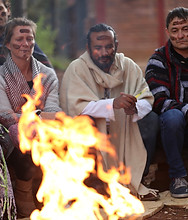
Traditional Mayan Fire Ceremonies/Ofrendas*
Upcoming Dates in 2027:
March 1 - March 29
November 15 - December 13
* Lead by Venus Ray, one of your facilitators, who was born in Mexico and has studied the ceremonies, rituals and traditions of his cultural heritage his whole life
** Our unique approach to teaching anatomy includes some hands on experience of human anatomy, using Thai massage as a medium. Taught by Venus Ray, an experienced masseuse and Thai Massage teacher.

This Training Is For You If...
-
You've been practicing for years and feel like you've only scratched the surface. Like the yoga you've encountered, however good, is pointing at something it never quite names.
-
You're less interested in perfecting your downward dog than in understanding what yoga actually is, where it came from, and what it originally pointed toward: a depth of being that existed long before the Lululemon and hot yoga era obscured it.
-
You've sensed that real teaching comes from understanding, not technique. That the most inspiring teachers you've encountered weren't the most flexible or the most polished. They understood something, and it showed.
-
You're considering a teacher training not because you have a class lined up, but because 28 days of immersive study feels like the right container for the depth you're looking for.
-
Or you do want to teach, and you're worried you won't be good enough when it's over. That's an honest concern and we take it seriously. What we've found is that confidence in teaching doesn't come from memorizing sequences. It comes from genuine understanding of what you're offering and why. That's what this training builds.

This Training Is by Application
We keep the group small and the container intentional. Because of that, we ask everyone to begin with a conversation before committing. If what you've read so far is speaking to something in you, the next step is simple.
To stay in the loop regarding this and future trainings,
including an up coming 300hr advanced Yoga Teacher Training Course,
and to receive a taste of our approach to yoga teaching
Inspire Others from the Depth of Your Own Search for Truth
Your capacity to inspire others arises from two things:
-
Your dedicated practice.
-
Your embodied understanding of what you are teaching.
That’s where we come in.
“The mediocre teacher tells.
The good teacher explains.
The superior teacher demonstrates.
The great teacher inspires.”
- William Arthur Ward

Your Training in Brief...
-
RYS 200HR Yoga Teacher Training (Yoga Alliance Registered)
-
28 days, fully residential
-
3 vegan/vegetarian meals per day
-
Meditative Hatha Yoga : Emphasizing awareness, embodiment and cultivating the energy body
-
Tantrik Yoga & Meditation : A body based, somatic approach to meditation on the non-dual nature of reality
-
Pranayama/breathwork, Mudra and Bandha : Classically these were the main components of Hatha Yoga
-
Emotional Digestion and understanding trauma
-
Embodiment practices (The Realization Process)
-
History of Yoga : Beyond physical practice we offer a comprehensive exploration of yoga as a tradition and cultural movement, essential for authentic study, practice and teaching of yoga in todays world.
-
Tantrik Yoga Philosophy
-
Embodiment practice
-
Intro to Ayurvedic principles
-
Yogic diet and nutrition
-
3-day Silent Meditation Retreat
-
Anatomy : taught in a conventional, text book style and, uniquely! through Thai massage!
-
Weekly cacao ceremonies
-
Integration of the teachings into Daily Life

Why This Training Exists
Modern yoga has drifted far from its roots. For many, "yoga" now means athletic postures, stylish leggings, and curated social feeds.
Many teacher trainings follow suit, emphasizing postural precision while overlooking, or at best paying lip service to, the vast philosophical and historical foundations from which yoga arose.
And yet something in serious practitioners keeps pulling them deeper. Not toward more advanced postures or better adjustments, but toward what yoga was actually pointing at before it became a fitness industry.
That is the yoga we practice, live, and teach. Not transcendence, not escapism, not performance.
“Yoga is not escape from life. It is intimacy with reality itself"
Most teacher trainings build their spiritual foundation primarily on Patanjali's Yoga Sutras. It's a text we study and respect. But Patanjali represents one strand of a much larger and more varied tradition, one that emerged from a specific cultural context, monastic renunciation, and a view of the body and world that most modern practitioners don't actually share.
Yoga has never been one thing. Long before and alongside Patanjali, other traditions were developing a very different vision: that the body is not an obstacle to awakening but its vehicle, that the world is not something to transcend but to inhabit more fully, that practice is participation, not renunciation.
This training draws deeply on that second current, particularly non-dual Shaivite Tantra, not as a rejection of classical yoga but as a fuller picture of what the tradition has always contained. For practitioners who have felt that something essential was missing from the yoga they've encountered, this is often where that missing piece lives.

How Is This Training Different?
Most YTT's
-
21 days or less. Including less than 140hrs of class time *
-
Skeletal schedule. As little as 6.5 hours per day *
-
As little as 1 x 1.5hr daily practice session *
-
Focus on posture, alignment, strength and flxibility.
-
Rely mainly on Yoga Sūtra, Bhagavad Gītā, HathaPradipika**
-
Teach a single system of 7 chakras
-
Teach the vedic 5 kosha model of the subtle body
-
Boring anatomy slide show presentation
Our Training
-
28 day full immersion, offering more than 200hrs of class time
-
Complete, intensive schedule. 9+ hours of class time per day.
-
4+ hours of daily practice, plus experiential philosophy
-
Focus on embodiment, awakening, integration
-
Draws teachings from Tantrik and lesser known yogic textual sources
-
Teach multiple, different chakra systems and associated practices**
-
Teaches the Tantrik 5 layered self and subtle body anatomy**
-
Fun, practical hands on anatomy classes, partially presented through classes in Thai Massage
* These are not empty numbers, but are based on our research of similar YTT’s, if you are interested, we can share the examples that we used to come up with these numbers via personal email.


What You Will Gain
1. Transform First. Then You Teach.
-
A deeper sense of embodied presence.
-
Inner resources to navigate the demands of your life.
-
Clarity regarding your spiritual longing and how your life can flow in harmony with your aspiration.
-
Tools for emotional integration and growth.
-
A new orientation to life. from reaction to responsive awareness, from indifference to awe in the face of the mystery of existence
-
Confidence in yourself that emerges from the depth of your practice
2. Embodied Skill, Not Just Theory
-
Detailed study of asana: anatomical, energetic, meditative, such that you feel comfortable teaching and deepening your own asana practice after the training.
-
Foundational pranayama and breathwork training based on the Indian tradition of hatha yoga, classical tantra and the modern breathwork movement.
-
Meditation and self-inquiry practices. Exploring a full range of meditation techniques and practices that will equip you with both knowledge and experience sufficient to build or deepen your own practice.
-
Somatic and subtle-body explorations, working with breath, mantra visualization, energy channels and chakras.
-
A guide to proper Sanskrit pronunciation and an optional opportunity to learn some basics of Sanskrit language.
-
Basic grasp of the foundations of Thai massage (the course includes a 1 day workshop on Thai massage, plus part of your anatomy classes will be delivered in a hands on way through Thai massage training).
-
Introductory exposure to the principles of somatic psychotherapy, which, if practiced and embodied through self exploration, can become a basis for supporting future students through emotionally challenging periods.
-
A chance to practice Acro yoga as a fun and connecting way to explore yoga outside of its classical, traditional contexts. (Note: this is not an Acro Yoga facilitator training and you will not be trained sufficiently to teach Acro yoga, just enough to have fun)
3. Histotical Context: Roots, Texts, and Tradition
-
Evolution of yoga from asceticism to embodied realization. An exploration of the latest scholarship on the origins and history of Yogic Traditions.
-
Classical Yoga: Patanjalayogashastra - In modern times the Pātañjala Yogaśāstra (The yoga sutra of patanjali and its primary commentaries) is known as the primary source text on the philosophy and practice of Classical Yoga. We will study parts of this text to gain an appreciation of its message and to examine its relevance to the modern practitioner.
-
Hatha Yoga Texts: The haṭhapradīpikā is a foundational manual on the practice of haṭha yoga. We will study this text and then explore earlier and less known source texts on the practice of haṭha yoga such as: Datatreyayogashatra - Gorakshashatika - Amritasiddhi.
-
Tantric texts: Tantrasāra, Pratyabhijñā Hṛdayam, Shiva Sutra and Spandakarika. No modern approach to yoga practice or philosophy would be complete without an exploration of classical tantra, a revolutionary tradition of embodied spiritual practice that, uniquely in its time, did not require asceticism, renunciation or celibacy, instead emphasizing a world embracing path of practice that leads to fully embodied spiritual realization (Jīvanmukti).
4. Teaching From Understanding
-
Guiding students safely and authentically. Leaning on experience where possible, and understanding how and when to refer to theoretical understanding.
-
Crafting and delivering talks. Using your own experience and insight born of your life and practice, supported by your studies to deliver short talks that give context and direction to the practice of your students is an important part of teaching.
-
Practical anatomy and alignment. Part delivered through multi media presentation and text book study, part through your practice of yoga asana and giving corrections to your fellow classmates and Uniquely to this training, partly through hands on training in Thai massage, you will gain a solid understanding of the basic of the body’s structure and function.
-
Intelligent sequencing and when to drop it. Part of teaching a yoga class is about the postures you select and the journey you create. Of course much more than this is the level of deep, meditative awareness you are able to guide your students into.
-
Holding space/creating containers for transformative practice. How to prepare for your classes, how to engage your students and create safety and trust and how to share your own practice while remaining attentive to the dynamics and needs of the room are all important skills we will develop.
-
Clarity and integrity regarding power dynamics and the teacher student relationship.
-
Teaching and practice as seva, service, an essential shift in focus that helps tame the ego on the mat and sustain a meaningful practice off of the mat.
Meet Your Guides
Between us, we bring over 45 years of combined practice, study, teaching, and solitary retreat experience.
Our shared vision: to return yoga to its original purpose the awakening of embodied consciousness.

Kyle Brooks
E-RYT 500 - Lead Trainer
Lead trainer with nearly 20 years of practice experience and 12 years teaching. Tantrik philosophy, Sanskrit study, subtle body practices, somatic meditation, and non-dual inquiry.
Kyle has been a dedicated practitioner and student of non-dual Shaivite Tantra for nearly two decades. His study goes beyond the popular yoga syllabus: he works directly with some of the world's leading Sanskrit scholars and tantrik teachers, including Acharya Sthaneshwar Timalsina of the Vimarsha Foundation, and is currently pursuing initiation into the sarvamnaya tradition of Nepali Shaiva Tantra.
He has spent extended periods in solitary and darkroom retreat, brings a serious study of Sanskrit to his teaching, and draws on a range of primary source texts that most yoga trainings never touch.
His teaching style is precise, philosophically grounded, and deliberately free of spiritual performance. He teaches because he finds these traditions genuinely transformative, and that tends to show.

Sasha Medvedovskaya
RYT 500
Focuses on embodiment, integration of the spiritual philosophy, emotional digestion and meditation. Psycotherapist, Non Dual Meditation teacher, Dance& Movement therapist
Sasha brings nearly two decades of practice to her teaching, along with a rare combination of formal credentials: she is a licensed psychotherapist, clinical psychologist, and certified dance and movement therapist.
She has trained as a non-dual meditation teacher in Hridaya Yoga and in the Realization Process of Judith Blackstone.
Her work sits at the intersection of spiritual practice and embodied psychological healing. Where insight alone doesn't reach, she knows how to work with what the body is holding. Her teaching is warm, precise, and grounded in genuine personal practice.
RYT 500
.jpeg)
Venus Ray
RYT 500
Venus Ray is a yoga teacher, ceremonialist, and vegan chef with over 15 years on the path of yoga and ancestral medicine, weaving ancient wisdom into modern life to cultivate balance and awareness.

What's Included
-
Eligibility to register for the RYT 200 certification with Yoga Alliance. (Upon successful completion of the training)
-
28 nights accommodation
-
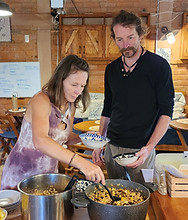
3 delicious healthy meals per day
-
9+ hours of class time Monday to Saturday
-
Morning practice + free time on Sundays
-
Weekly Cacao Circles
-
2 Temazcals (ritual sweat lodge)



The Content Up Close
Up to 4.5 Hours of Yogic Practice Daily

-
Meditative Hatha Yoga - Emphasizing intimacy with & sensitivity to experience, subtle body awareness and embodied presence
-
Pranayama - Exploring the classical breath based practices of lifeforce control and expansion from the traditions of Hatha Yoga and Classical Tantra
-
Breathwork - Complementing classical techniques with contemporary breath practices
-
Awareness Cultivation - Contemplative and meditative practices that aim to establish the capacity to recognize and rest stably as the presence of awareness
-
Somatic Meditation - Tantrik meditative practices that cultivate awareness of the subtle/energy body
-
Embodiment Exercises - Drawing on our training in The Realization Process of Judith Blackstone and the Somatic meditation of Vajrayana teacher Reggie Ray we present methods of opening to non-dual awareness based in the body and the senses.
-
Somatic Psychotherapeutic Practices - Learn to harness the skills developed through your practice to work directly with dense and challenging emotions and guide your future students to do the same.
-
Yoga Nidra - Deep yogic relaxation practices intended to facilitate super conscious sleep.

A Deep Diving Study of Essential Spiritual Topics
-
Non-duality
-
What is yoga
-
What is tantra
-
Pure motive
-
Death and dying
-
and much more
-
Surrender
-
The role of the mind on the spiritual path
-
A number of different chakra systems
-
The energy/subtle body
-
Living with an open heart
Practical Exploration of Yogic and Tantrik Source Texts
Based on the latest, cutting edge scholarship, we will dive as deeply as our time allows us into:
The History of Yoga
-
Where, when and how did these traditions develop?
-
Who practised them and why?
-
How does modern yoga, as taught in yoga studios, relate to the ancient Indian traditions?
Yogic Philosophy
-
We will read parts of a great many yogic texts together, teasing out subtlety and nuanced meaning through group discussion and exploration.
-
By the end you will understand that Yoga has never been 1 thing and thus escapes any straight forward definition.
-
Through knowing what we can know about the roots of Yoga, we avoid dogmatism, naivety and new age misinterpretations.
-
You will also understand how your practice is relevant to your modern life, which teachings compliment life in the modern age and which teachings (even if they are popular today) are best left in the past.
Tantrik Philosophy
-
Discover Tantra, beyond New Age, sex based workshops.
-
We look at some fundamental non-dual tantrik texts to see how the exquisitely refined philosophy has influenced yoga all the way down to the modern age.
-
Discover the relationship between yoga and tantra.
-
Learn some fundamental tantrik yoga practices and perspectives on reality and how they apply practically to your every day life.
* NOTE: We are not authorized teachers within specific tantrik lineages (although between us, we are dedicated students within some of those lineages), as such we are not offering initiation into tantrik lineages, or empowering anyone to teach Tantra, nor will we be teaching the forms of deity yoga that are fundamental to classical tantrik practice. The purpose of this part of the course is to understand the influence and relevance of Tatra as a modern day teacher of Hatha Yoga/Modern postural yoga and to be inspired by Tantra's wellspring of rich, life affirming philosophy and practices.
“I searched for God and found only myself. I searched for myself and found only God.”
- Rumi
Daily Schedule
06:30-08:30 Morning Practice
08:30-10:00 Breakfast Break
10:00-12:00 Lecture, Group Discussion, Q&A
12:00-13:00 Embodiment and Movement
13:00-15:30 Lunch Break
15:30-17:30 Anatomy/Teaching Methodology/Practicums
17:30-18:30 Afternoon Practice
18:30-19:30 Dinner
19:30-20:30 Study Groups & Sharing Circles
20:30-21:00 Evening Practice
Not Sure If This Training Is For You?
Get in touch via WhatsApp below, get to know us and arrange a discovery call.
Embracing theIndigenous Wisdom of Mexico
On the surface, the indigenous traditions of Mexico and India look quite different. Followed deeply, both lead to the same openness: beyond cultural identity, beyond fixed views on how things are, into an intimacy with life that makes reverence for other traditions not only natural but necessary.
We do not propose a blending. It is in the spirit of that respect that we open the training to practices outside the yoga lineage. You will not leave here qualified to facilitate these ceremonies. That requires years of dedicated study within a living tradition. What you will receive is the medicine these practices carry, offered by the people who carry them.

Mayan Fire Ceremonies and Ofrendas
with Carlos Batz
Carlos Batz is a Mayan curandero from this land, who has dedicated his life to the ceremonial practices of his lineage. He opens both the course and the residential retreat with traditional fire ceremonies and ofrendas, and closes the course at the end. The arc of the training is held within ceremony from beginning to end.
Cacao Ceremony with Venus Ray
Weekly ceremonial cacao, offered by Venus within a held container. Not a supplementary activity. A quiet doorway into the same territory the meditation and embodiment practices are opening, approached through a different kind of intelligence.


Temazcal with Venus Ray
Two temazcals built into the training, guided by Venus in the ancestral tradition of this region. The body releases what the mind has been carrying. Held with care for both depth and safety.
* A NOTE ON PLANT MEDICINES: The only "plant medicine" used during this training will be cacao. You are asked to refrain from any other kind of psychoactive plant, including tobaco and marijuana for the duration of the training.
Cost Breakdown
28 Days - YTTC:
Course Fee: 29,000 MXN
(aprox. $1,680 USD)
Meals: (3/day per 28 days + dinner on the arrival day) - 14,000 MXN
(aprox. $810 USD)
Accommodation per 28 nights:
Option #1: a single bed in a dorm (1 bunk bed - max. 2-4 people per room): 15,740 MXN
(aprox. $910 USD)
Option #2: a single bed in a twin room/triple spacious cabin with a private bathroom &terrace:
24,430 MXN
(aprox. $1,420 USD)
TOTAL:
in Accommodation Option #1: 56,170 MXN
(aprox. $3,260 USD)
Super Early Bird Price*: 41 650 MXN
(aprox. $2,415 USD)
in Accommodation Option #2: : 67,430 MXN
(aprox. $3,915 USD)
Super Early Bird Price*: 53 100 MXN
(aprox. $3,080 USD)
* Super Early Bird until October 1st !
Scholarship Info
Depending on inscriptions, we are able to offer a limited number of partial scholarships.
Please, fill out this form to apply for the scholarship.
You can also find us on Bookretreats.com

Know the Ground You're Standing On
Philosophy isn't decoration added to a yoga training. It's the context that makes practice coherent, the clarity that keeps you from teaching what you don't truly understand, and the direction that sustains a practice over decades. Any genuine teacher carries at least a working grasp of the history and philosophy from which their practice emerged. This is where that begins.
Our Philosophical Roots
It can't be over stated how important it is that the philosophy that underpins practice, and therefore the attitude towards the practice itself, be aligned with the way you live and envision your expression in the world. This may even be obvious, yet most of the YTT courses available base the spiritual dimension of their trainings on systems that while beautiful, are totally contradictory to the aspiration of most modern people.
For example Patanjali states
"By purification, one gets disgusted with one's own body and practices non-attachment towards others".
- Yoga Sutra 2.40
An attitude that seems appropriate to celibate renunciates who practiced rigorous penance/discipline and rejection of worldly life, but wholly inappropriate to those of us that aspire to thrive in the beauty of worldly life and existence.
It is for this reason that while we deeply respect and value Patanjalian Yoga, we do not rely solely on this text to provide the vision that supports and guides our practice.
This training is informed by non-dual Shaivist Tantra (a.k.a. Kashmir Shaivism). We draw deeply on the philosophy of these lineages due to their profoundly world embracing outlook:
"...there is one desire in me. Whenever I enjoy anything, I want to perceive You along with Pārvatī. Whether in the world of senses or the world of objects, you must appear to me and I will worship you"
- Utpaladeva - Saṁgrahastotranāma trayodaśastotraṁ.
Where many trainings rely solely on the HathaPradīpikā for the practice of postural yoga, we also draw from earlier Hatha yoga texts such as:
-
Dattatreyayogashastra
-
Amṛtasiddhi
-
Gorakṣaśataka
-
Śivasaṃhitā
As well as Tantrik texts such:
-
pratybijna hridayam of Kshemaraja
-
Tantrasara of his master Abhinavagupta.
-
Shiva Sutra
-
Spandakarika
These writings reveal yoga as participation, not renunciation the recognition that the body, mind, and world are expressions of the radiant, living pulsation of awareness.

Our Approach: Yoga as Transfiguration
Our emphasis is the transformation of perception, through the body.
Much of modern yoga focuses on transforming the body, developing strength, flexibility, stamina and/or balance. This is wonderful and certainly has a positive impact on the health of the body and mind.
However this is far from the original intention of yogic practice. In the last 2500 years the word yoga has meant many things.
Long, long ago, before the Buddha, it referred to rigorous and difficult ascetic practices that completely denied the body and the experience of life in the world. Later, during the development and proliferation of the Tantric tradition, yoga mostly meant forms of visualisation and breath control aimed at controlling the vital energy of the being.
Pre-tantrik yoga was body and world denying. Post Tantra, the world and the body were integrated into yogic practice with respect and reverence. Indeed the Tantrik traditions themselves emphasized that spiritual awakening should be brought into every cell of the body and lived in every dimension of "worldly life".
This training blends the traditional practices of Hatha Yoga (asana, pranayama, mudra, bandha and meditation) with the non-dual vision of classical Shaivist tantra (embodied, life embracing awakening and experiential intimacy with all of existence).
Learn to Practice and TeachYoga as the Somatic Science of Embodied Awakening.
In this training you will experience the shift from head to heart, from second hand interpretation of life (conceptual thought) to an intimate, deeply felt, living experience of the world, as you feel its arising and passing within you, awareness.
Then learn how to teach it!
Through a meditative approach to yoga asana, pranayama, somatic meditation, inquiry, experiential philosophy and embodiment practices, you’ll learn to embody this realization as lived understanding, something felt, not merely believed.
“When the body becomes transparent to consciousness, the world reflects the radiant, creative light of awareness.”
The Door Is Open, Come on In
If something in this page has stirred something in you, trust that. We'd love to meet you, hear where you are in your practice and your life, and explore together whether this is the right step. Kyle does most discovery calls himself. There's no pressure to commit, just a conversation.

FAQ's
Is it Safe to Travel to Mexico/to Your Centre?
Mexico’s reputation regarding safety, while not entirely untrue, is often exaggerated by the news media, especially in neighbouring countries where opposition to Mexico/Mexican people supports political agendas and dramatic media coverage drives clicks, views etc. There are certain areas of Mexico where there is a high rate of crime. These areas are thus less safe for foreign travellers. However, millions of travellers and holiday makers pass through Mexico each year without incident. This particular area had seen a little instability in 2024, surrounding the presidential elections in Mexico, however the situation has stabilized considerably and the area is generally safe. A huge movement by local authorities has recently removed hundreds of known cartel members from the area and made big steps in increasing general safety in San Cristobal de Las Casas and Chiapas in general. Additionally, our centre is nestled in a mountain valley outside the historic city of San Cristobal de Las Casas, an area protected by native peoples and indigenous laws. Regarding travel here, we have a long standing relationship with a particular taxi driver and his brother. They provide safe and reliable airport and local shuttle services for guests coming/leaving the centre.
What is the easiest most direct way to get to the retreat?
There are generally 2 main airports that you can fly into. Of these, by far the most popular is MEX Aeropuerto Internacional de la Ciudad de México (Mexico City airport). The other is CUN Cancún International Airport. (There are other international airports in Mexico, into which you may find cheaper flights from your specific location from time to time, but these are the most convenient and common) From either of these airports you can catch a connecting flight to TGZ Aeropuerto Internacional Ángel Albino Corzo. This flight takes around 1.5hrs from Mexico City. From this airport we can arrange a taxi to pick you up directly from the airport and bring you either directly to us, or to San Cristobal de Las Casas (around 1000MXN). Or you can take an airport shuttle (you will need at least some basic Spanish) into San Cristobal de las Casas (around 300MXN). Either option takes around 1.5hrs From San Cristobal de Las Casas, we arrange a shuttle to our centre on the day that your retreat is schedule to begin, at 13:30. The cost of this suttles service is 150MXN per car, shared between however many people are in the car. the ride is about 20 minutes to arrive at the centre.
I have previous experience with Yoga &/or meditation will this retreat be to basic for me?
Years of feedback from participants have shown clearly that this retreat is well adapted to suit both beginners and experienced practitioners. The first few days will start slowly, and if you have quite a bit of sitting/retreat experience you will find this to be a gentle warm up and lead into longer sitting. You will also likely find that the attitude towards and theoretical aspects of the practice of meditation to be quite fresh and very profound. While the retreat embraces the visions of classical yoga, Advaita Vendanta and early Buddhism within it’s philosophical framework, our approach to practice draws heavily on the tantric traditions, in which an incredibly all-embracing and embodied approach to spiritual practice is emphasized. For experienced meditators this comes as a very welcome, complimentary and sometimes evolutionary deepening to their practice.
I’m new to yoga &/or meditation will I be able to keep up?
We start the retreat at a very beginner friendly level. We start with shorter sittings and build up over the first couple of days, we have found that even the most restless of people are able to adapt to the sitting practice after about 3 days and that many/most of the beginners that come for retreats both appreciate this graduated approach to learning to sit, and are surprised that within a few days they can sit for an hour without struggle. We have also found that our approach to teaching meditation, which is quite practical with guidance offered during the first 10-15 minutes of each practice sessions before we transition to simple silent sitting together, plus our emphasis on an attitude of acceptance and simplicity during meditation both make great conditions for learning, even if you have never sat before.
I have some physical injuries, will I be able to join the yoga/sit for meditation?
The style of yoga that we practice is primarily meditative and therefore very gentle physically. We emphasise awareness of the body/sensations and eventually the flow of subtle energies within the body. For this to be effective we must be able to find a balance of effort and relaxation in the poses, which means we generally keep them quite simple and therefore accessible to beginners. Advanced practice here refers more to the subtlety of attention and capacity to feel than it does to complicated postures. If you have any physical injuries please let us know in advance and we will adapt the practice sessions to suit your ability.
I’m Interested in this retreat primarily for psychological healing, will the contents and practices be appropriate for me?
Generally speaking, meditative, contemplative and spiritual practices can be incredibly beneficial for psychological health, stability, well being etc. This is especially true when those practices and teachings are body oriented and encompassing of a life guided by a genuine spiritual search and longing while living a well adjusted life in society, including making money, having relationships, jobs, projects, families etc. The teachings and practices of this retreat fit 100% in that category of spiritual teachings and practice. (This is certainly not always the case as many approaches in spirituality directly emphasise or are drawn from a cultural context in which genuine spirituality is seen as something incompatible with such a lifestyle. In such cases the practices and teachings may be entirely unhelpful, even damaging to someone seeking to heal deep traumas and psychological disorders). If you are passing through a difficult moment in life, like a loss, breakup or major change in life direction and circumstance, or if you have a history of trauma or psychological disorder that is well managed through therapy and previous personal development work, we know from experience that this retreat can be massively beneficial. Having said this, this retreat is not specifically designed to address people or situations of extreme psychological need. While everyone is welcome here, regardless of background and psychological state, if you are actively seeking to heal from traumatic life events or seeking alternative forms of treatment for diagnosed psychological disorders (such as bipolar, schizophrenia etc.) we would not recommend you attending this retreat. The reasoning behind this is that while we can help (Sasha is a licensed and practising psychotherapist and we both have years of experience working with people in quite extreme situations), in the context of this retreat (which is silent and by definition avoids direct personal contact and interaction between participants and/or facilitators) we are not able to provide the specific 1:1 support that is required in such delicate situations.